History of
Quran Scripts

From the earliest manuscripts written on date palms and parchment, to the illuminated calligraphy of the Islamic Golden Age, to the digital fonts used across the web today — the typography of the Quran spans 1,400 years of preservation, artistry, and innovation.

Understanding this history helps explain why there are so many different Quran scripts and fonts — and why each one carries deep significance.

Browse all fonts →
632–634 CE

The Compilation Under Abu Bakr (RA)

After the Prophet Muhammad (peace be upon him) passed away in 632 CE, a careful and systematic effort to compile and preserve the Qur'an was undertaken. This initiative was led by Abu Bakr (may Allah be pleased with him), particularly after many of the Companions who had memorized the Qur'an were martyred in the Battle of Yamamah. Concerned that portions of the Qur'an might be lost with the passing of its memorizers, he deemed it essential to collect the revelation into a single, preserved manuscript.

Zayd ibn Thabit (may Allah be pleased with him), who had served as one of the Prophet's primary scribes and had memorized the Qur'an himself, was appointed to lead this effort. During the Prophet's lifetime, Zayd had written down the revelations as they were received. Under Abu Bakr's instruction, he carefully gathered the Qur'anic verses from written materials and from those who had memorized them, verifying each portion with meticulous care.

Once the compilation was completed, the collected sheets were kept with Abu Bakr. After his passing, they were entrusted to Umar ibn al-Khattab (may Allah be pleased with him). Following Umar's death, the manuscript was placed in the care of his daughter, Hafsah (may Allah be pleased with her), where it remained safeguarded.
c. 650 CE

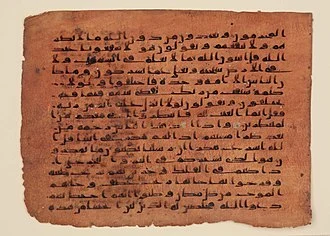
The Standardization Under ʿUthman (RA)

As Islam spread into new lands, dialect differences appeared in recitation. To preserve unity, ʿUthman ibn ʿAffan (RA) commissioned an official copy based on the manuscript preserved with Hafsah (RA).

A committee led by Zayd ibn Thabit (RA) prepared standardized copies and sent them to major cities of the Muslim world. Other personal codices were withdrawn to prevent confusion.

This established the Uthmanic rasm (consonantal text) used worldwide today.

7th Century CE

Earliest Surviving Qur'anic Manuscripts

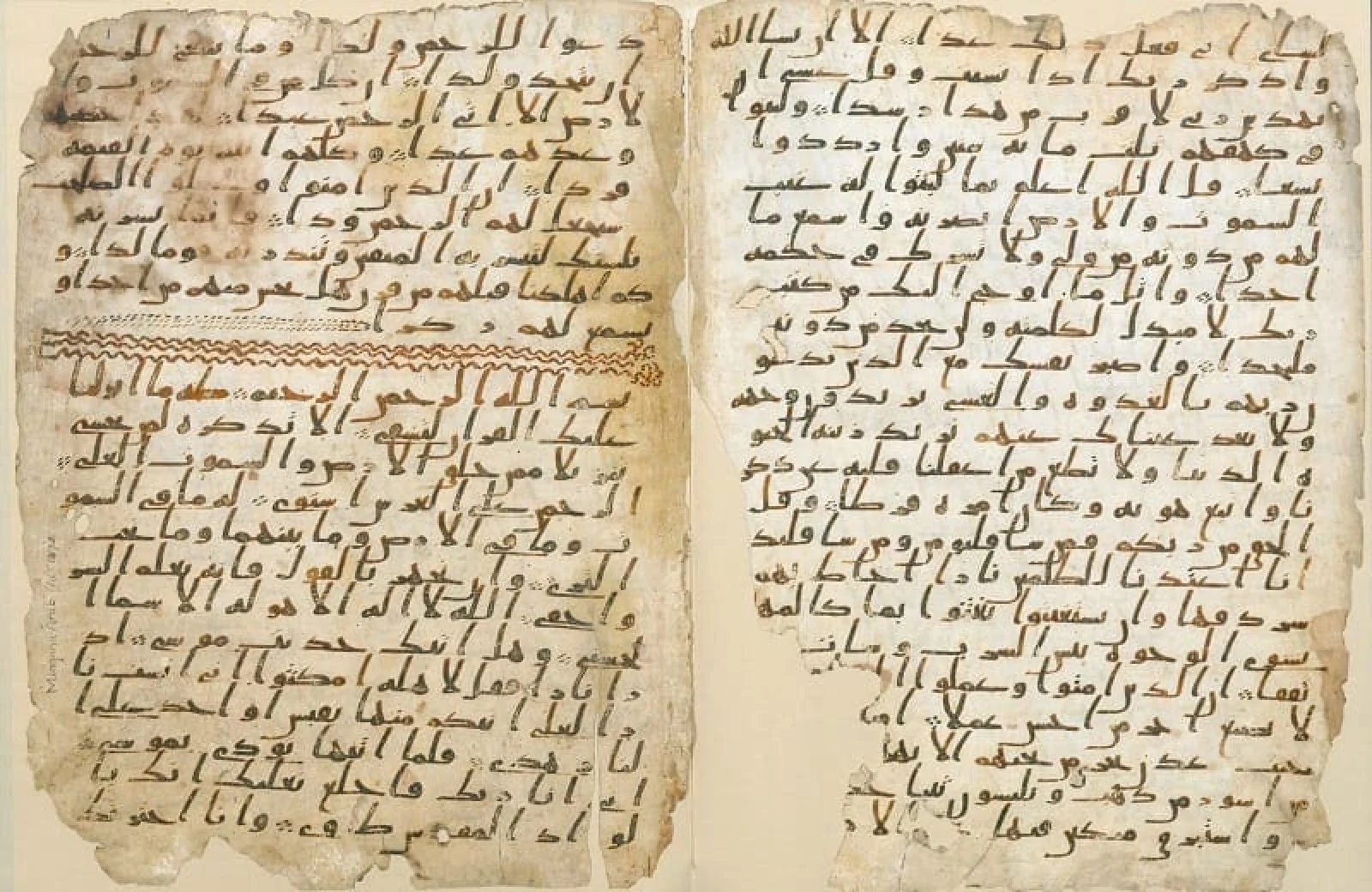
Very early Qur'anic fragments from the first century of Islam still exist today. They are written in early Hijazi script and reflect the same Uthmanic textual base.

Birmingham Qur'an Manuscript

  • Parchment dated to 568–645 CE
  • Early Hijazi script
  • Text matches today's Qur'an
Birmingham Qur'an Manuscript, c. 568–645 CE
7th–8th Century CE

Sana'a Manuscripts (Yemen)

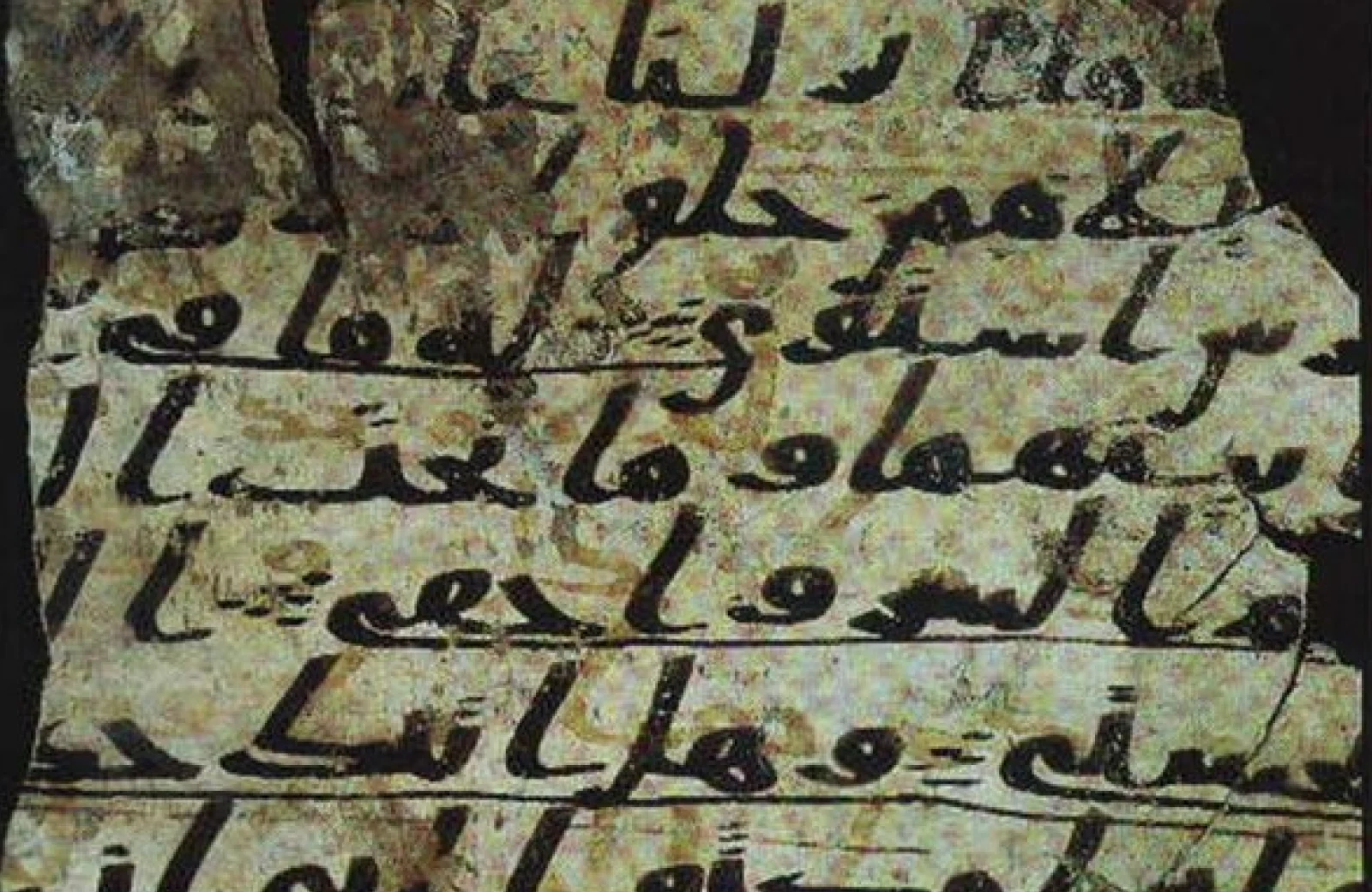
Fragments discovered in the Great Mosque of Sana'a reflect very early Qur'anic writing.

These manuscripts demonstrate early transmission of the Qur'an in written form.

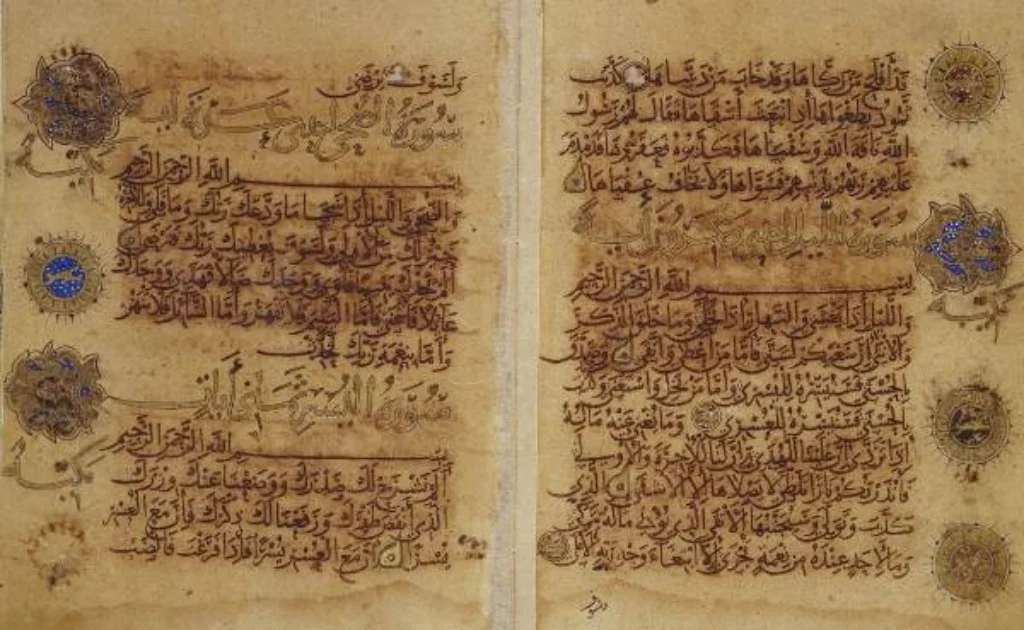
Qur'an in early Abbasid style, late 8th century
8th Century CE

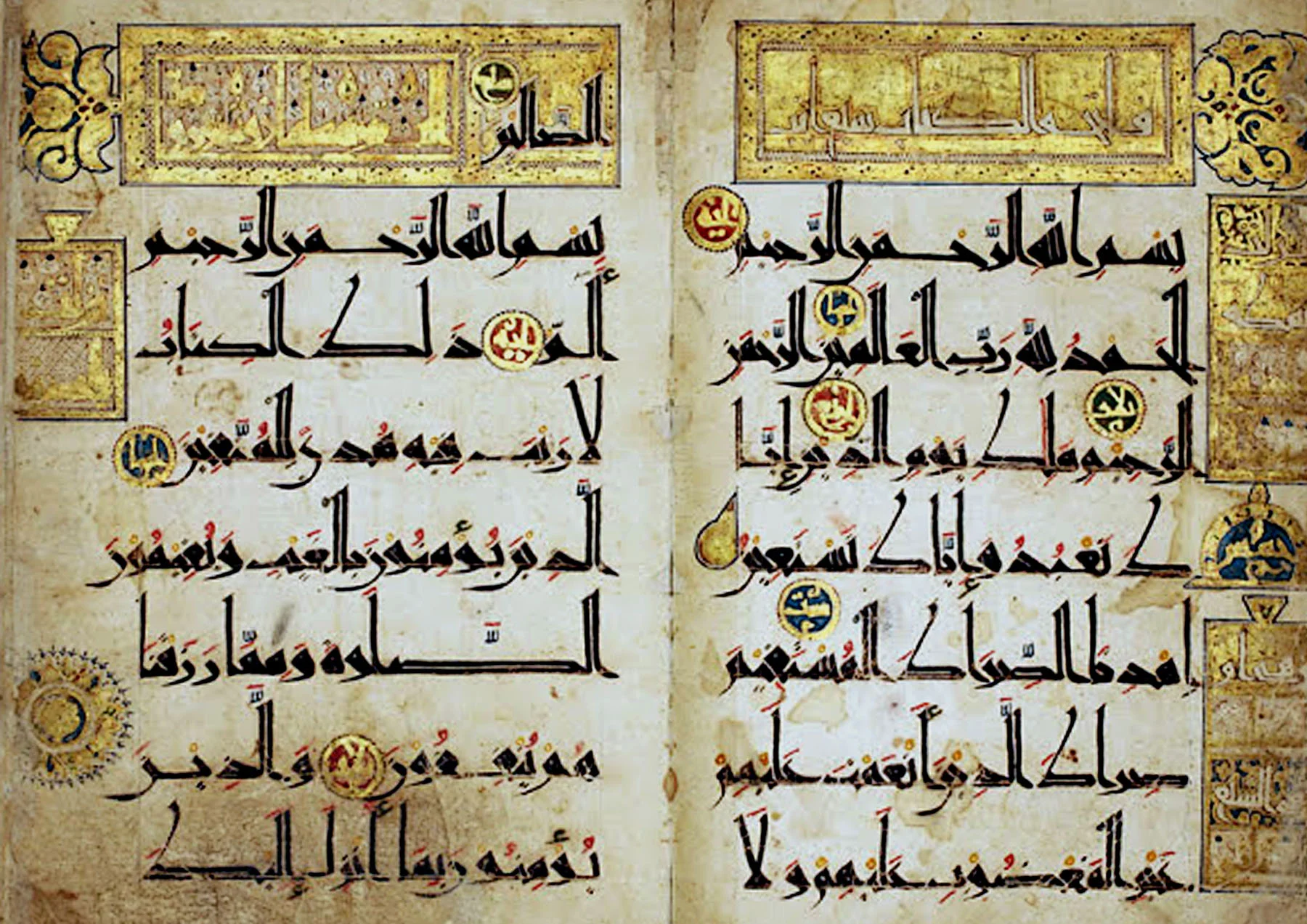
Umayyad Period — Early Kufic Qur'ans

Under the Umayyad Caliphate, Kufic script became widely used.

Characteristics:

  • Angular script
  • Sparse vowel markings
  • Monumental layout
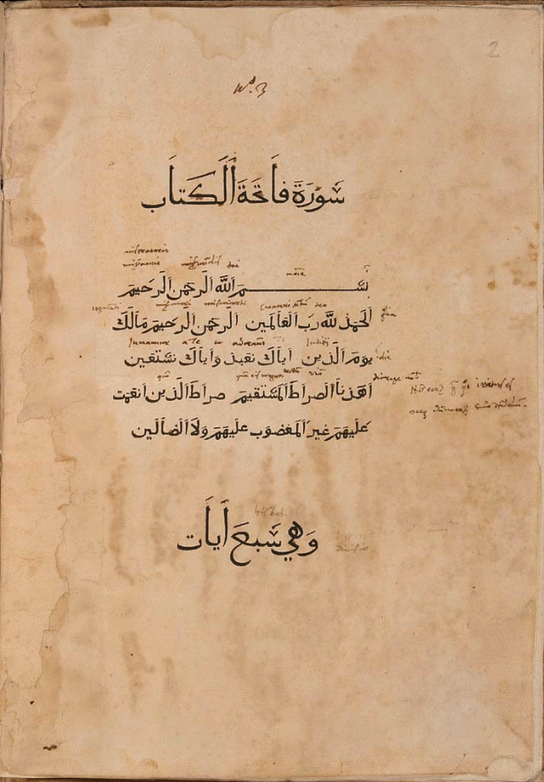
Kufic calligraphy of Surah Al-Fatiha, 11th century
9th–10th Century CE

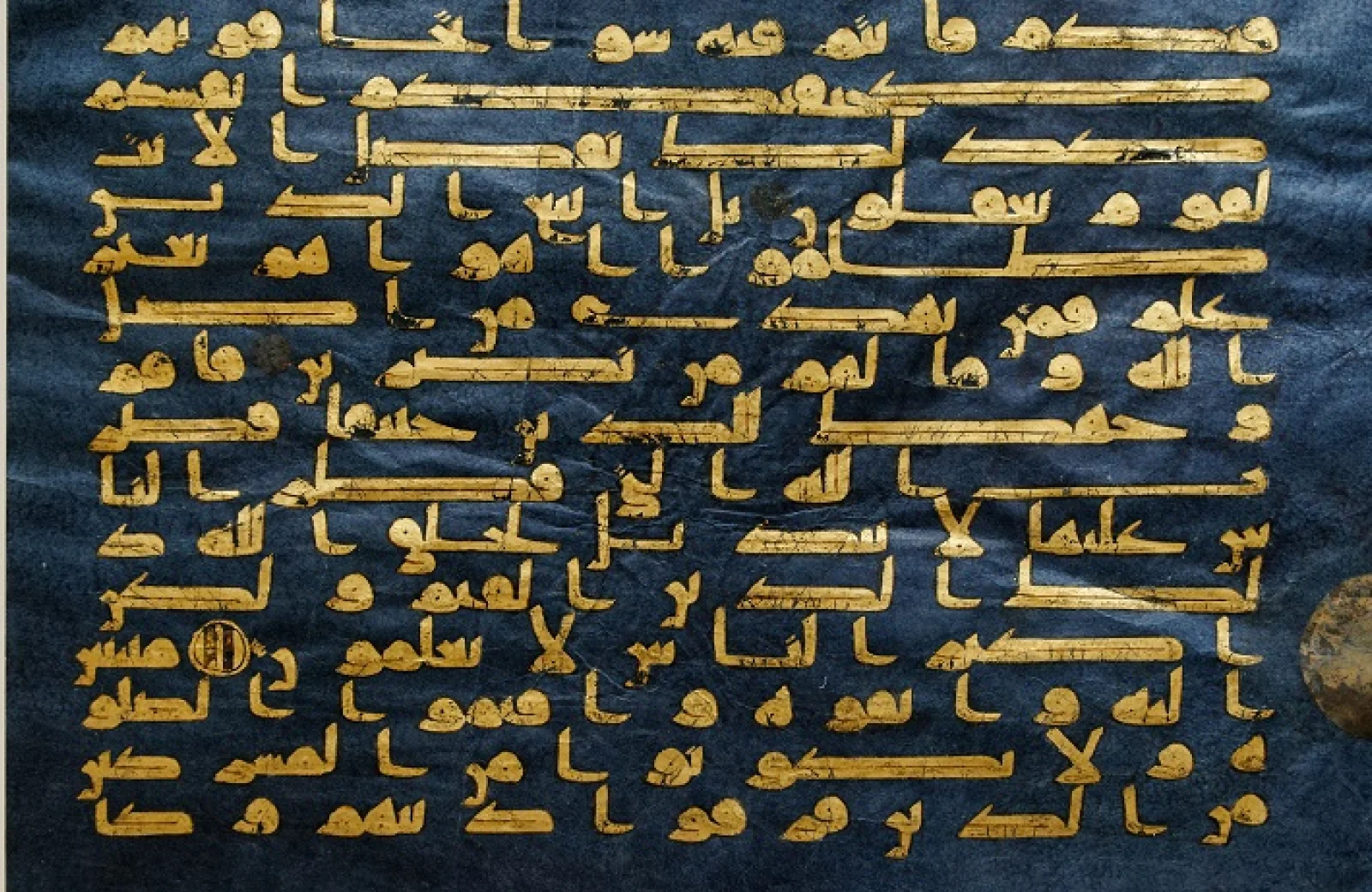
Abbasid Era — The Blue Qur'an

A remarkable example of artistic excellence is the Blue Qur'an, likely produced in North Africa.

  • Gold script on indigo parchment
  • Developed Kufic calligraphy
  • Same Qur'anic text
The Blue Qur'an Manuscript, late 9th to early 10th century CE
12th–14th Century CE

Maghrebi Script Qur'ans

Distinct rounded Maghrebi script developed in Morocco, Algeria, and Andalusia.

  • Different visual style
  • Same Uthmanic textual base
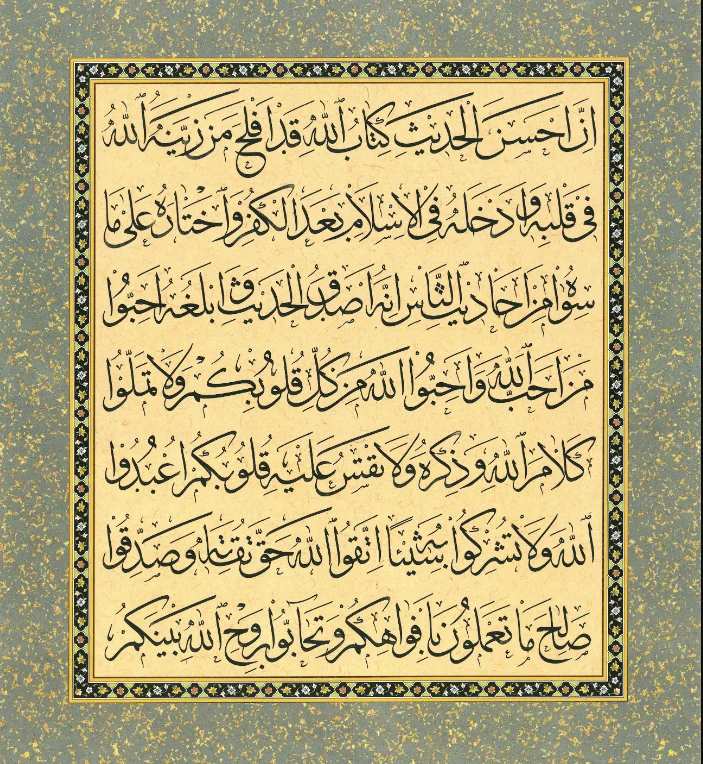
Thuluth calligraphy
Thuluth calligraphy
14th–16th Century CE

Ottoman Qur'ans

Ottoman scholars refined Naskh script and manuscript illumination.

  • Elegant Naskh script
  • Decorative surah headings
  • Continuity of the same Qur'an
Naskh calligraphy in the Ibn al-Bawwab Qur'an manuscript, 391 AH
1537 CE

Early European Printed Qur'an

A printed Qur'an was produced in Venice in 1537.

Though historically important, it had limited impact in Muslim lands.

The first printed Qur'an, 1537 edition by Fratelli Paganino
1924 CE

The Cairo Edition

The 1924 Cairo edition standardized the printed Qur'an according to the recitation of Hafs ʿan ʿĀsim.

  • Standardized verse numbering
  • Unified orthography
  • Influenced most modern prints
The Cairo Edition of the Qur'an, printed in 1924
1984–Present

Madinah Mushaf

The King Fahd Qur'an Printing Complex in Madinah distributes millions of copies annually.

  • Uthmani Naskh style
  • Widely distributed globally
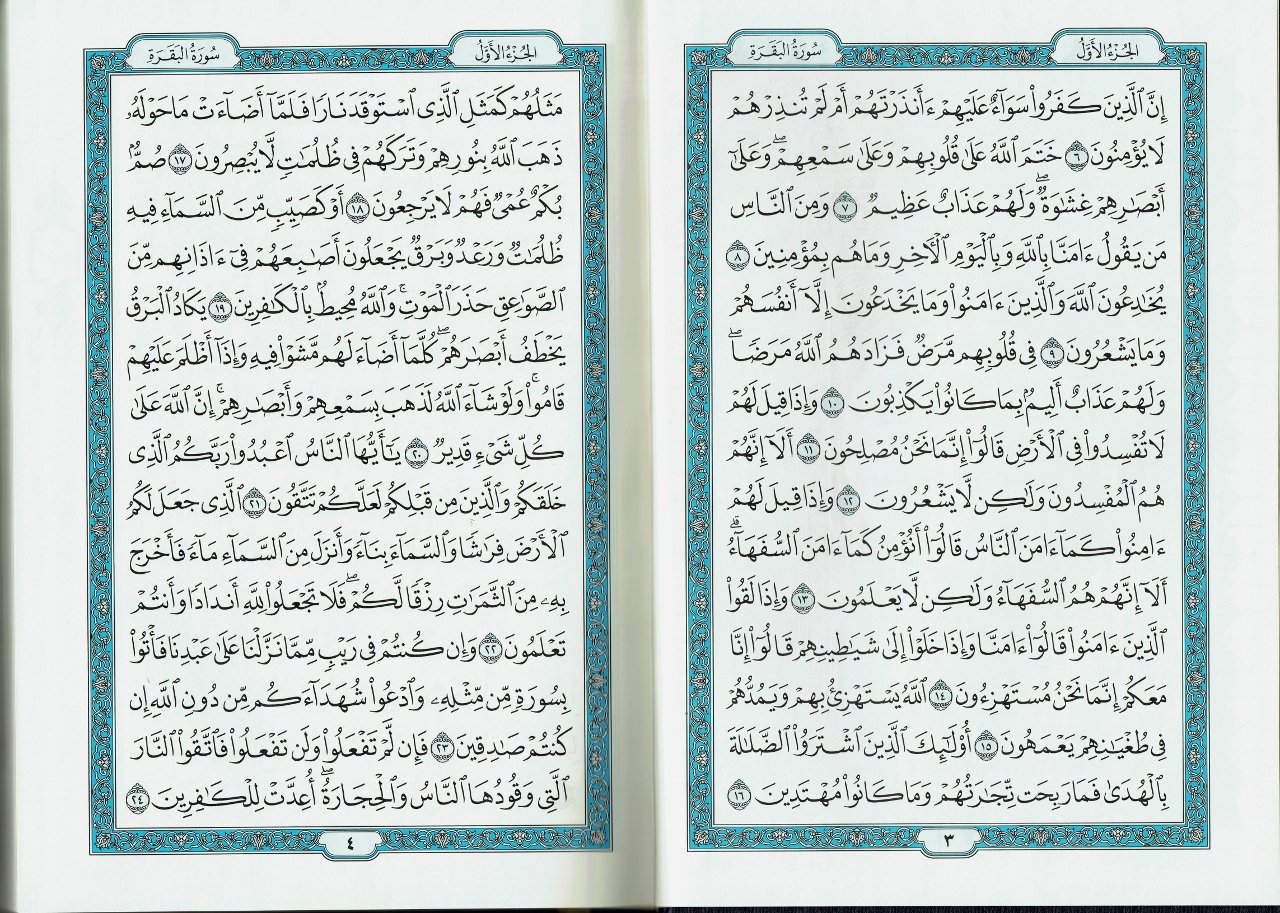
The Madinah Mushaf, King Fahd Qur'an Printing Complex
21st Century

The Qur'an in the Digital Age

In our time, the preservation of the Qur'an continues through modern technology.

With the rise of computers and smartphones, Qur'anic text has been carefully digitized according to the same Uthmanic rasm used in printed mushafs.

Specialized Qur'anic fonts were developed to ensure:

  • Accurate placement of vowel marks (tashkīl)
  • Proper rendering of stopping signs (waqf symbols)
  • Consistency across devices and platforms

Two major technological approaches emerged:

Glyph-Based Qur'anic Fonts

Early digital Qur'ans used glyph-based systems, where each page was carefully mapped so that the digital display would match the printed mushaf exactly — down to line breaks and layout. This ensured visual consistency for readers familiar with traditional printed copies.

Unicode-Based Qur'anic Text

With the development of Unicode standards for Arabic, Qur'anic text could be encoded character by character while still preserving:

  • Correct diacritics
  • Tajwīd marks
  • Canonical orthography

This allowed the Qur'an to be displayed accurately on websites, apps, and digital readers worldwide.

A Unified Text Across the Globe

Today, the Madinah Uthmani script, Indo-Pak layouts, Maghrebi prints, and Warsh and Ḥafṣ recitation editions all coexist digitally.

Whether printed in Madinah, recited in Morocco, memorized in Pakistan, or read on a phone in America — the Qur'an remains the same revelation sent to the Prophet Muhammad ﷺ.

The tools have changed. But the Words of Allah has been perfectly preserved in its wording from the time of revelation until today.

"Indeed, We have sent down the Reminder, and indeed We will preserve it."

— Qur'an 15:9